French grammar explained
Malgré vs bien que: despite or although?
You want to say that something happened despite an obstacle: rain, tiredness, a high price. French gives you two useful options. The key is not which one sounds stronger, but what kind of phrase you want to put after it.
Audio uses your browser’s French speech synthesis; voice availability and pronunciation may vary.
Choose by the structure, not by the strength of the contrast
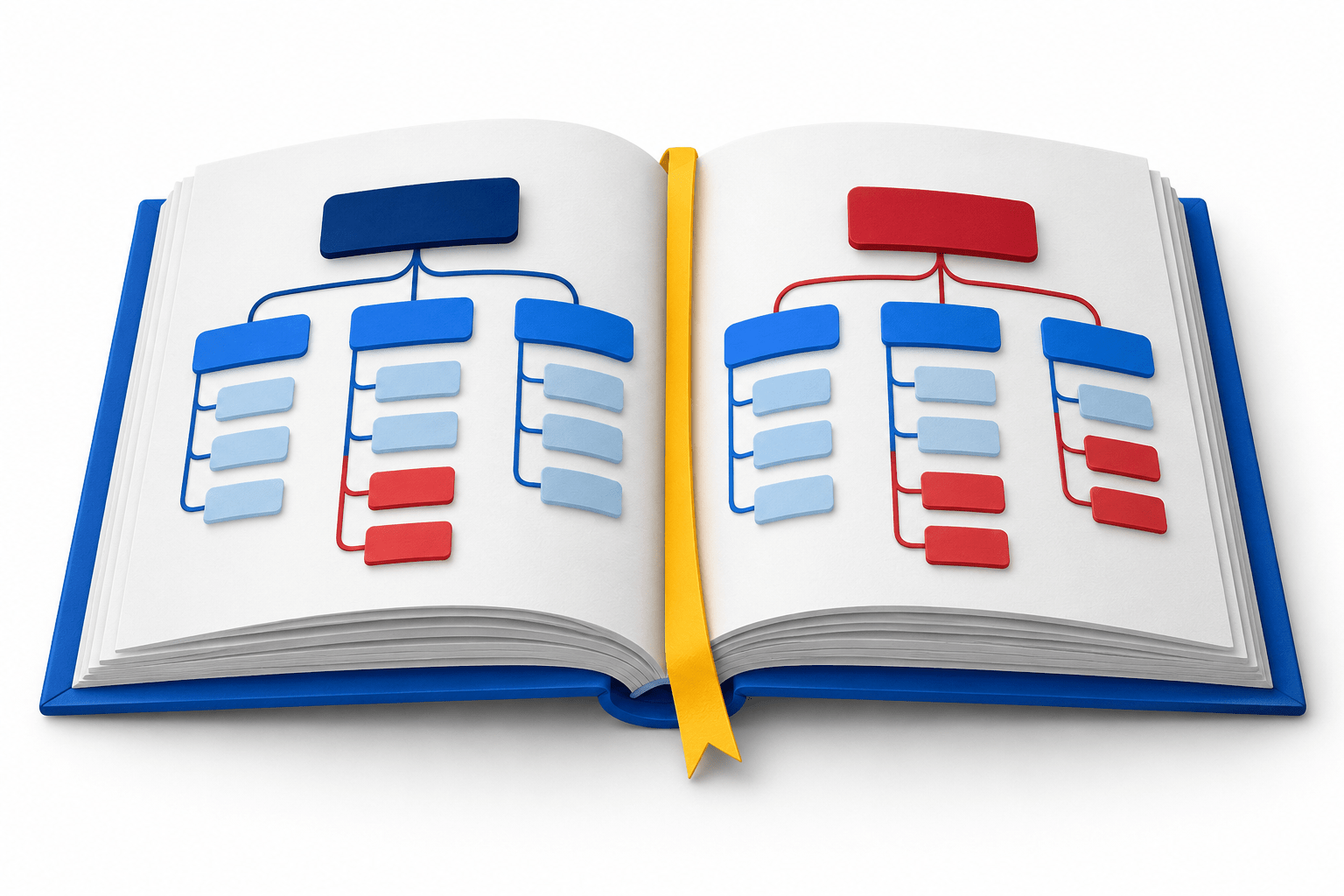
Malgré means “despite” or “in spite of.” Bien que means “although” or “even though.” Both introduce an obstacle that does not prevent the main event. The main difference is what follows them—not whether the obstacle is large or small.
| Pattern | French example | Natural English |
|---|---|---|
| malgré + noun group | Malgré la pluie, nous sortons. | Despite the rain, we’re going out. |
| bien que + clause in the subjunctive | Bien qu’il pleuve, nous sortons. | Although it’s raining, we’re going out. |
In the first sentence, la pluie names the obstacle. In the second, il pleuve gives it a subject and a conjugated verb. Both say that the outing goes ahead.
How do you build a sentence with malgré?
Put a noun group after malgré. It can include an article, a possessive, an adjective or other details: malgré le bruit, malgré ses efforts, malgré cette longue attente. Do not add de.
Despite the noise, I can concentrate.
She carried on despite her difficulties.
A stressed pronoun is also possible: malgré moi, malgré lui, malgré nous. These can mean “against my/his/our will” or “in spite of myself/himself/ourselves,” depending on the sentence.
I smiled in spite of myself.
Notice that English “despite being tired” does not translate word for word as malgré être fatigué. Use a noun, malgré sa fatigue (“despite her tiredness”), or rebuild it as a clause: bien qu’elle soit fatiguée (“although she is tired”).
Why does bien que take the subjunctive?
In standard French, bien que normally introduces the subjunctive. This is a construction rule: it does not mean that the obstacle is imaginary or doubtful. The tiredness or rain may be entirely real.
Although she is tired, she is coming with us.
Although it is cold, the terrace is still open.
Learn the connector with a few common forms: bien que je sois, bien qu’il ait, bien que nous puissions, bien qu’elles fassent. Before a vowel, que becomes qu’.
When the concession concerns an event completed before the main event, the past subjunctive is useful: avoir or être in the subjunctive + past participle.
Even though she had booked, she couldn’t get a seat.
Here, the booking happened before the unsuccessful attempt to find a seat. The English translation uses “had booked” to make that earlier timing clear. French uses ait réservé, not the indicative a réservé, after bien que.
How can you switch from one structure to the other?
Name the obstacle with a noun for malgré, or describe it with a clause for bien que. You may need to change more than the connector.
| With malgré | With bien que |
|---|---|
| Malgré sa fatigue, Léa travaille. | Bien qu’elle soit fatiguée, Léa travaille. |
| Malgré le prix élevé, nous l’achetons. | Bien que le prix soit élevé, nous l’achetons. |
| Malgré leurs efforts, ils ont échoué. | Bien qu’ils aient fait des efforts, ils ont échoué. |
The corresponding meanings are “Despite being tired, Léa is working,” “Despite the high price, we’re buying it,” and “Despite their efforts, they failed.” The subjects of the two clauses do not have to differ. Bien que je sois fatigué, je continue (“Although I’m tired, I’m carrying on”) is correct.
Both structures can come before or after the main clause. A comma normally separates a concessive phrase or clause placed at the beginning: Malgré la pluie, nous sortons. After the main clause, the punctuation depends on how closely the information is attached: Nous sortons malgré la pluie.
What about malgré que, même si and shorter forms?
Malgré que is disputed. You will hear and read it, and major writers have used it. Nevertheless, it is often criticised in edited standard French. For a reliable learning model, choose malgré + noun or bien que + subjunctive. There is a literary fixed expression, malgré que j’en aie (“much as I may dislike it”), but it is not a productive model for everyday sentences.
Même si is not followed by the subjunctive simply because bien que is. Compare Bien qu’il soit fatigué, il continue (“Although he is tired, he’s carrying on”) with Même s’il est fatigué, il continue (“Even though he is tired, he’s carrying on”). In this factual example, même si takes the indicative. It can also introduce a hypothetical “even if”; that is a separate use, not a reason to treat all three connectors as interchangeable.
Shortened bien que phrases are possible. In Bien que fatiguée, Léa continue, “Although tired, Léa carries on,” the subject and verb have been omitted. Fatiguée refers to Léa and agrees with her. For learners, the full form bien qu’elle soit fatiguée is the clearest starting point.
Do not duplicate English “but.” Write Bien qu’il pleuve, nous sortons, not Bien qu’il pleuve, mais nous sortons. Alternatively, use two clauses with mais: Il pleut, mais nous sortons (“It’s raining, but we’re going out”).
Mini practice: choose and build
Complete each item using the form indicated.
- ______ la circulation, nous sommes arrivés à l’heure. (Use a connector before a noun.)
- Bien qu’il ______ malade, il travaille aujourd’hui. (être)
- ______ ses efforts, le résultat reste décevant. (Use a connector before a noun.)
- Bien que nous ______ peu de temps, nous visitons le musée. (avoir)
- Rewrite with bien que: Malgré le froid, nous sortons.
- Rewrite with malgré: Bien qu’elle soit fatiguée, elle continue.
Show answers and explanations
- Malgré — la circulation is a noun group.
- soit — present subjunctive after bien que.
- Malgré — ses efforts is a noun group.
- ayons — present subjunctive of avoir with nous.
- Bien qu’il fasse froid, nous sortons. — replace the noun with a full clause.
- Malgré sa fatigue, elle continue. — replace the clause with a noun group.
Takeaway: malgré names an obstacle; bien que introduces a clause about it. Choose the structure first, then remember the subjunctive after bien que.
Make the rule clear. Make it yours.
Move from recognising the pattern to using it in your own sentences, with clear explanations and guided practice.
Sources and further reading
- Académie française: bien que with a clause or a shortened phrase
- Académie française: Questions de langue, entry “Malgré que”
References checked on October 19, 2026.