French grammar explained
French Grammar Lessons and Clear Explanations
French grammar becomes easier when you understand how its structures work and when to use them. These lessons explain the rules clearly and help you distinguish words and expressions that often seem similar.
Written especially for English-speaking learners, each guide includes practical explanations, examples and comparisons to help you use French more accurately and confidently.
Explore our French grammar lessons

Visiter vs Rendre visite: How to Say Visit in French
Use visiter for places and rendre visite à for people—but everyday French also uses aller voir, consulter and passer voir. Learn which expression fits each kind of visit.

Join our newsletter to get our tools to boost your French and offers for our courses.
Emprunter vs Prêter in French: How to Borrow or Lend
Learn emprunter vs prêter in French: borrow from someone, lend to someone, use the right pronouns, and avoid common mistakes with clear examples in context.
Assister vs Aider in French: Attend or Help Explained
Discover why assister à usually means “attend,” how to use aider with a person, and when assister quelqu’un is a correct formal expression.
Why Do French -IR Verbs Follow Two Different Patterns?
Why do French -ir verbs form nous finissons but nous partons? Discover the Latin history of -iss- and how to identify second-group verbs today.
Revenir vs Retourner vs Rentrer: Choose the Right Verb
Learn revenir vs retourner vs rentrer in French: compare their usual viewpoints, natural overlap, past-tense patterns, examples, audio and practice.
Il faut vs Devoir in French: How to Express Obligation
Il faut and devoir can both mean “must” or “have to,” but one presents necessity impersonally while the other names who is responsible. Learn the patterns, tone and subjunctive rule.

Partir vs Quitter vs Laisser: How to Say Leave in French
French uses different verbs for departing, leaving a place or person, and leaving something behind. Learn the logic and sentence patterns that separate partir, quitter and laisser.

Se Souvenir vs Se Rappeler: Which One Takes De?
Se souvenir and se rappeler both mean “to remember,” but their complements behave differently. Learn the standard patterns, pronouns and accepted uses of se rappeler de.
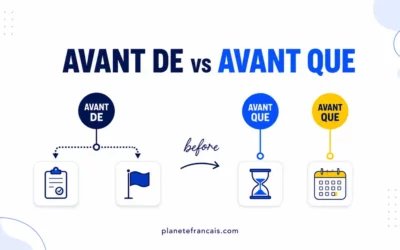
Avant de vs Avant que in French: The Simple Subject Rule
Use avant de when the subject stays the same and avant que when it changes. Learn the subject test, the subjunctive rule and the optional ne explétif.
Manquer vs Rater in French: How to Use Each Verb Correctly
Manquer and rater can both mean “to miss,” but only manquer is used for missing someone or lacking something. Learn the structures that change the meaning.

Parce Que vs Car vs Puisque: How to Choose in French
Parce que, car and puisque can all introduce a reason, but they organise information differently. Learn which connector sounds natural in each context.
Encore vs Toujours in French: Still, Again or Always?
Encore and toujours can both mean “still,” but they express continuation differently. Learn when French uses each word for still, again, more and always.
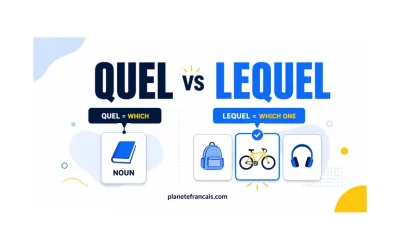
Quel vs Lequel in French: How to Choose the Right One
Use quel before a noun and lequel when the noun is already understood. Learn all the forms, the contractions with à and de, and the mistakes to avoid.
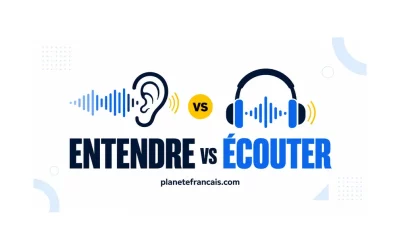
Entendre vs Écouter in French: Hear or Listen Explained
Entendre and écouter both relate to hearing, but only one expresses deliberate attention. Learn the difference through natural examples, common mistakes and a short practice.
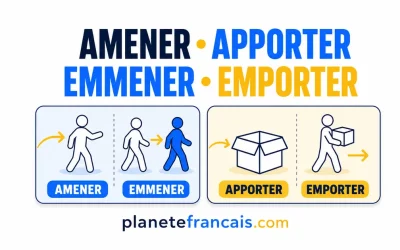
Amener, Apporter, Emmener or Emporter in French?
Should you use amener, apporter, emmener or emporter? Learn the two simple distinctions that help French speakers choose the correct verb naturally.
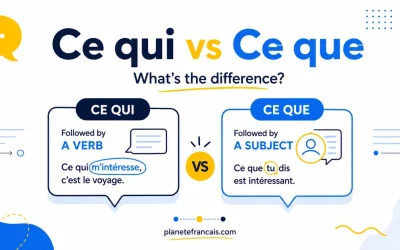
Ce Qui vs Ce Que in French: The Simple Difference
Ce qui and ce que can both mean “what” in English. Learn how to choose the correct form by identifying whether it replaces the subject or object.

Tout, Tous, Toute, Toutes in French: What’s the Difference?
Learn when to use tout, tous, toute and toutes in French, how they agree, and how their pronunciation changes depending on the sentence.

Savoir and Connaître: What’s the Difference in French?
Learn the difference between savoir and connaître in French, with clear structures, natural examples and the mistakes English speakers often make.

Pendant vs Pour in French: What’s the Difference?
Learn when French uses pendant and when it uses pour to express duration, including completed actions, planned periods and common mistakes.

Depuis vs Il y a in French: What’s the Difference?
Learn the difference between depuis and il y a in French: one describes an action that is still continuing, while the other locates a past event.

Depuis vs Pendant in French: What’s the Difference?
Learn how depuis and pendant express duration differently in French, with timelines, natural examples and a simple way to choose the right form.

Bon vs Bien in French: What’s the Difference?
Learn when to use bon and bien in French, how adjective and adverb patterns work, and the important expressions that do not follow a direct English translation.

Mieux vs Meilleur in French: What’s the Difference?
Learn the difference between mieux and meilleur in French: one improves an action or state, while the other compares a noun.

How to Say “So Far” in French: Jusqu’ici, Jusque-là, Jusqu’à Présent, Jusqu’à Maintenant
Learn the differences between jusqu’ici, jusque-là, jusqu’à présent and jusqu’à maintenant, with natural examples for saying “so far” in French.

Jour vs Journée in French: What’s the Difference?
Learn the difference between jour and journée in French and how perspective, duration and common expressions determine which word sounds natural.

C’est vs Il est in French: What’s the Difference?
Learn when to use c’est and il est in French, including descriptions, professions, adjectives and the sentence patterns English speakers often confuse.

An vs Année in French: What’s the Difference?
Learn the difference between an and année in French and how duration, quantity and emphasis determine which word sounds natural.
The verb s’enfuir and 10 synonyms
Learn how to use the French verb s’enfuir and compare ten useful synonyms, from neutral French to informal expressions.
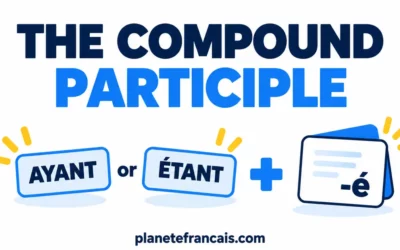
The French compound participle (participe composé)
Learn how to form, agree, and use the French compound participle to express an earlier completed action.

How to use se faire + infinitive in French
Learn the three main uses of se faire followed by an infinitive, with clear examples, grammar notes, and a practice exercise.
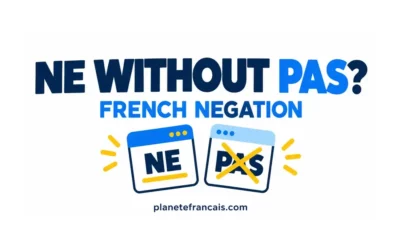
French negation: when can you use ne without pas?
Learn when pouvoir, oser, savoir, and cesser can use ne without pas in formal and literary French.

Gender of Countries in French: Masculine or Feminine?
Learn how to identify the gender of country names in French, with useful spelling patterns, important exceptions and practical memory tips.

Gender in French: How to Know if a Noun Is Masculine or Feminine
Learn how French noun gender works, which word endings provide useful clues and how to remember whether a noun is masculine or feminine.

Choisir la terminaison é ou er
Comment choisir entre la terminaison é ou er à la fin des verbes en français ? Techniques et astuces.
Practise French in our live classes
Understand French more clearly and learn to use it through guided practice with a native teacher and a small group of learners.
EXPLORE OUR FRENCH GRAMMAR CLASSES