Why You Understand French
But Can’t Speak It
And how to finally start speaking with more confidence
You can understand French when you read. You can follow your teacher in class. You can watch French videos and recognize many words. But then someone asks you a simple question in French and suddenly… nothing. Your mind goes blank. You know the words, but they do not come.
Quick answer: if you understand French but can’t speak it, it does not mean you are bad at French. It usually means that you have trained your passive French more than your active French. Understanding and speaking are connected, but they are not the same skill.
Why you understand French but can’t speak it
Why do I understand French but can’t speak it?
You understand French because your brain can recognize words, structures and meanings when they are already in front of you.
Speaking is different. When you speak, you have to find the words yourself. You have to choose the right structure, conjugate the verb, pronounce the sentence, and do all of this quickly.
You may understand Je suis allée au marché ce matin, but when you want to say something similar, you suddenly hesitate: should I say je suis allé or j’ai allé? Do I need agreement? How do I say “this morning”?
Understanding is recognition. Speaking is production. And production is harder.
Is it normal to understand more French than I can say?
Yes. It is completely normal. Most language learners understand more than they can say. This is true in French and in many other languages.
Your passive vocabulary includes words you can recognize when you read or listen. Your active vocabulary includes words you can use naturally when you speak.
For example, you may understand words like pourtant, quand même, finalement, d’ailleurs, se souvenir, or avoir besoin de. But when you speak, you may use only very simple words because they are the ones that come automatically.
The goal is not only to learn more French. The goal is to activate the French you already know.
Why do I freeze when someone speaks French to me?
You freeze because real conversation creates pressure. When you listen to a podcast, you can pause, replay, guess, and continue. You do not have to answer immediately.
In a real conversation, you have to understand the question, decide what you want to say, find the words, choose the grammar, pronounce the sentence, listen to the other person’s reaction, and continue the conversation.
That is a lot. So your brain slows down. Sometimes it blocks.
This does not mean you do not know French. It means your brain has not yet had enough practice producing French under real conditions.
Why do I forget simple French words when I speak?
You forget simple words because knowing a word passively is not the same as being able to use it actively.
For example, you may know the word pourtant. When you read it, you understand it. But when you speak, you may not use it. Instead, you say something simpler, like mais.
This happens because the word is stored in your passive memory. To make it active, you need to use it several times in real sentences.
Je voulais sortir, mais il pleuvait.
Je voulais sortir, pourtant il pleuvait.
Il pleuvait, mais je suis sortie quand même.
Is watching French videos enough to speak French?
Watching French videos is useful, but it is not enough if your goal is to speak.
Videos help you improve your listening comprehension. They help you hear natural pronunciation, rhythm and vocabulary. They are excellent for exposure.
But watching is still mostly passive. You receive French. You do not produce French.
To improve speaking, you need to transform passive activities into active ones. Instead of only watching a French video, pause and repeat one sentence aloud, answer a question about the video, summarize it in two simple sentences, or reuse one useful expression in your own sentence.
Want to turn passive French into active speaking?
At Planète Français, our e-learning lessons help you understand French clearly, and our small live classes help you use it in real conversations.
Explore our French coursesHow to turn passive French into active French
Why can I understand my French teacher but not native speakers?
Your teacher probably speaks more clearly than most native speakers. A good French teacher naturally adapts their speech. They may speak more slowly, articulate more clearly, choose words you know, and repeat important ideas.
Native speakers do not always do this. They may speak fast. They may use contractions, slang, incomplete sentences, cultural references, humor, or regional pronunciation.
In class, you may hear: Je ne sais pas.
In real life, you may hear something closer to: Chais pas.
You need both: clear French to build confidence, and natural French to train your ear.
Should I study more grammar or speak more?
You probably need both, but not separately. Many learners study grammar alone and then try to speak later. But grammar becomes useful when you use it in real sentences.
Studying the passé composé is useful. But if you only do written exercises, you may still hesitate when speaking.
Hier, j’ai travaillé.
Ce matin, j’ai pris un café.
La semaine dernière, je suis allée chez des amis.
Après le travail, j’ai regardé une série.
The goal is not to know the rule perfectly. The goal is to use the structure more automatically.
How can I turn passive French into active French?
To turn passive French into active French, you need to reuse what you understand. Do not try to activate everything at once. Choose one small structure and use it several times.
Structure: J’ai besoin de…
J’ai besoin de temps.
J’ai besoin de pratiquer.
J’ai besoin de parler plus souvent.
J’ai besoin d’une correction.
Then say the sentences aloud. Your mouth needs training too. Speaking is physical. Pronunciation, rhythm and confidence improve when you say sentences aloud.
How can I speak French without translating everything in my head?
You stop translating by building ready-to-use French structures. You do not need to create every sentence from zero.
In your native language, you use many automatic phrases: “I don’t know”, “I think that”, “The problem is that”, “I’m not sure”, “It depends”. You need the same thing in French.
Je ne sais pas.
Je pense que…
Le problème, c’est que…
Je ne suis pas sûr / sûre.
Ça dépend.
Instead of translating word by word, start from a French phrase you already know.
What to do every day to speak better French
What should I do every day to speak better French?
You do not need a complicated routine. You need a realistic routine that includes active practice.
A simple daily speaking routine
Je n’ai pas encore eu le temps de le faire.
Je n’ai pas encore eu le temps de regarder la vidéo.
Je n’ai pas encore eu le temps de finir l’exercice.
How long does it take to become more comfortable speaking French?
It depends on your level, your regularity, and the type of practice you do. But many learners can feel a difference quite quickly when they start practicing actively.
You may not become fluent in two weeks. But you can become less blocked. You can answer more easily. You can reuse more phrases. You can feel that French is becoming more available.
The important thing is not to wait until you feel ready. You become ready by speaking.
What kind of practice really helps you speak French?
The best speaking practice is not just “talking”. Good speaking practice should include clear topics, useful vocabulary, repeated structures, correction, time to prepare, time to speak spontaneously, and supportive feedback.
If you only have free conversation, you may repeat the same mistakes. If you only study grammar, you may understand the rule but not use it. If you only listen, you may improve comprehension but not speaking.
You need a bridge between learning and real conversation. That bridge is guided practice.
What if I make mistakes when I speak French?
You will make mistakes. Everyone does. Mistakes are not the opposite of progress. They are part of progress.
The real problem is not making mistakes. The real problem is making the same mistakes for years without correction.
A man says: Je suis allé.
A woman says: Je suis allée.
Correction should not be humiliating. Correction should be useful, precise and encouraging.
So, why can’t I speak French yet?
You may not speak French comfortably yet because you need more active practice, not because you are not talented.
You may have spent months or years training your comprehension: reading, listening, watching videos, doing grammar exercises, and understanding explanations. All of this is useful.
But now, you need to train production: answering questions, speaking aloud, reusing useful phrases, making mistakes, receiving corrections, and speaking again.
That is how you move from I understand French to I can speak French.
Final recap
If you understand French but can’t speak it, your problem is probably not your level. It is the difference between passive knowledge and active use.
Understanding French means recognizing words and structures.
Speaking French means producing sentences yourself.
Passive French grows when you read, listen and watch.
Active French grows when you speak, repeat, answer and receive corrections.
To improve, do not only learn more French. Activate the French you already know. Start with short sentences, repeat useful structures, speak aloud, get corrections, and practice in real situations.
Ready to move from understanding French to actually speaking it?
At Planète Français, we help adult learners turn passive knowledge into active French through structured lessons, guided practice, small live classes and clear corrections from native French teachers.
Latest articles
Avant de vs Avant que in French: The Simple Subject Rule
Use avant de when the subject stays the same and avant que when it changes. Learn the subject test, the subjunctive rule and the optional ne explétif.
Manquer vs Rater in French: How to Use Each Verb Correctly
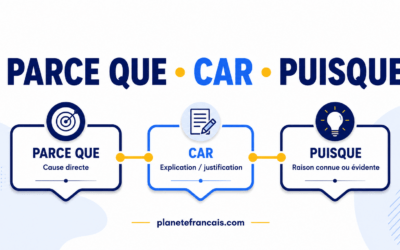
Parce Que vs Car vs Puisque: How to Choose in French
Parce que, car and puisque can all introduce a reason, but they organise information differently. Learn which connector sounds natural in each context.