Bon vs Bien in French What’s the difference?
French learners often translate bon as good and bien as well. That is a useful start, but it is not enough. In real French, the choice depends on what the word describes: a noun, a verb, a taste, a person, a situation, or a general judgment.
Use bon when you describe a noun: a good book, a good idea, a good teacher. Use bien when you describe a verb, an action, or a general situation: to speak well, to work well, it’s good.
The simplest rule is this: bon is usually an adjective, so it changes form. Bien is usually an adverb, so it does not change.
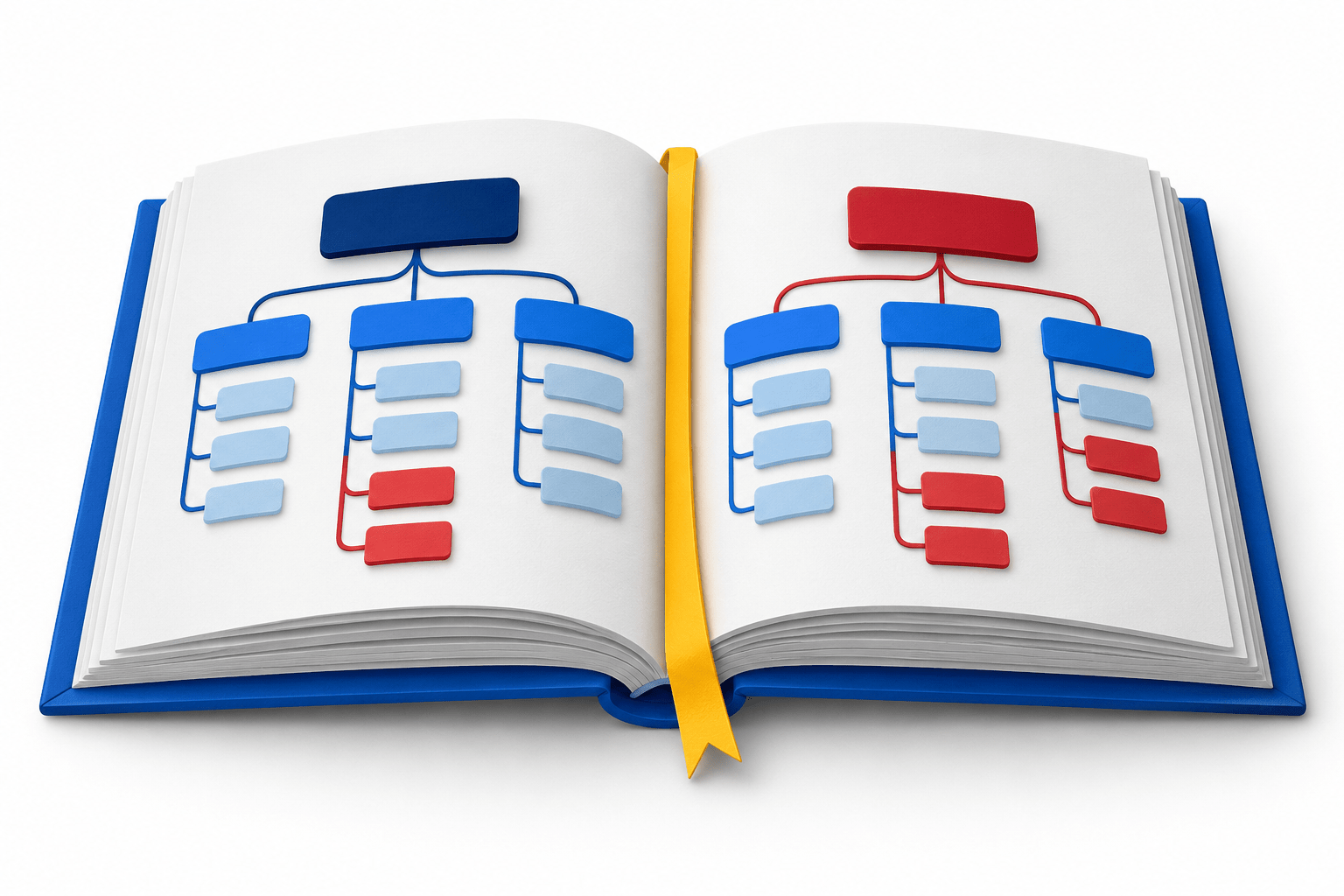
Quick contrast
1. Use bon with nouns
Bon is an adjective. It describes a noun, so it agrees with that noun in gender and number.
| Form | Use | Example |
|---|---|---|
| bon | masculine singular | un bon film |
| bonne | feminine singular | une bonne idée |
| bons | masculine plural | de bons résultats |
| bonnes | feminine plural | de bonnes questions |
In French, bon is usually placed before the noun: un bon restaurant, une bonne réponse, de bons conseils.
2. Use bien with verbs
Bien is usually an adverb. It describes how an action is done. Because it is an adverb, it does not agree: it stays bien.
Do not say Elle parle bon français if you mean “She speaks French well.”
Say: Elle parle bien français.
3. C’est bon vs C’est bien
This is where many learners hesitate, because both expressions can sometimes translate as “it’s good.” But they are not used in the same way.
Use c’est bon for taste
When you are talking about food, drinks, smells, or taste, French usually uses bon.
Use c’est bon to say “it’s okay” or “that’s enough”
In everyday French, c’est bon can also mean “it’s okay,” “that’s fine,” or “that’s enough.”
Use c’est bien for a general positive judgment
Use c’est bien when you judge an action, a situation, a choice, or a result. It often means “that’s good,” “that’s a good thing,” or “well done.”
4. Why do we say très bien but très bon?
Both expressions exist, but they do not describe the same thing.
| Expression | Meaning | Typical use |
|---|---|---|
| très bon | very good, tasty, competent | describes a noun, a person, a product, food, or quality |
| très bien | very well, very good as a general judgment | describes an action, a result, a situation, or a general state |
5. Special case: parler bien français vs parler un bon français
You can say both, but the grammar is different.
Elle parle bien français. Here, bien describes the verb parler. She speaks well.
Elle parle un bon français. Here, bon describes the noun français. The quality of her French is good.
For most everyday conversations, Elle parle bien français is the more natural and useful sentence.
6. Mini practice: choose bon, bonne, or bien
Complete each sentence with the correct word: bon, bonne, or bien.
- Elle parle ______ italien.
- C’est une ______ idée.
- Ce café est très ______.
- Tu as ______ compris.
- Il a trouvé un ______ travail.
- C’est ______ de pratiquer un peu chaque jour.
See the answers
- Elle parle bien italien.
- C’est une bonne idée.
- Ce café est très bon.
- Tu as bien compris.
- Il a trouvé un bon travail.
- C’est bien de pratiquer un peu chaque jour.
Final recap
Use bon when you describe a noun: un bon livre, une bonne idée, de bons conseils. Use bien when you describe an action, a verb, or a general situation: parler bien, travailler bien, c’est bien.
If you hesitate, ask yourself one simple question: Am I describing a thing or an action? If it is a thing, you probably need bon. If it is an action, you probably need bien.
Ready to make real progress in French?
At Planète Français, you can learn French with a structured method, interactive e-learning, and small live classes with native teachers. Choose the support that fits your rhythm.
Latest articles

Visiter vs Rendre visite: How to Say Visit in French
Use visiter for places and rendre visite à for people—but everyday French also uses aller voir, consulter and passer voir. Learn which expression fits each kind of visit.

Emprunter vs Prêter in French: How to Borrow or Lend
Learn emprunter vs prêter in French: borrow from someone, lend to someone, use the right pronouns, and avoid common mistakes with clear examples in context.

Assister vs Aider in French: Attend or Help Explained
Discover why assister à usually means “attend,” how to use aider with a person, and when assister quelqu’un is a correct formal expression.