French grammar explained
Amener, apporter, emmener or emporter?
English often uses “bring” and “take,” but French makes two distinctions at the same time: are you moving a person or a thing, and are you bringing them toward a destination or taking them away?
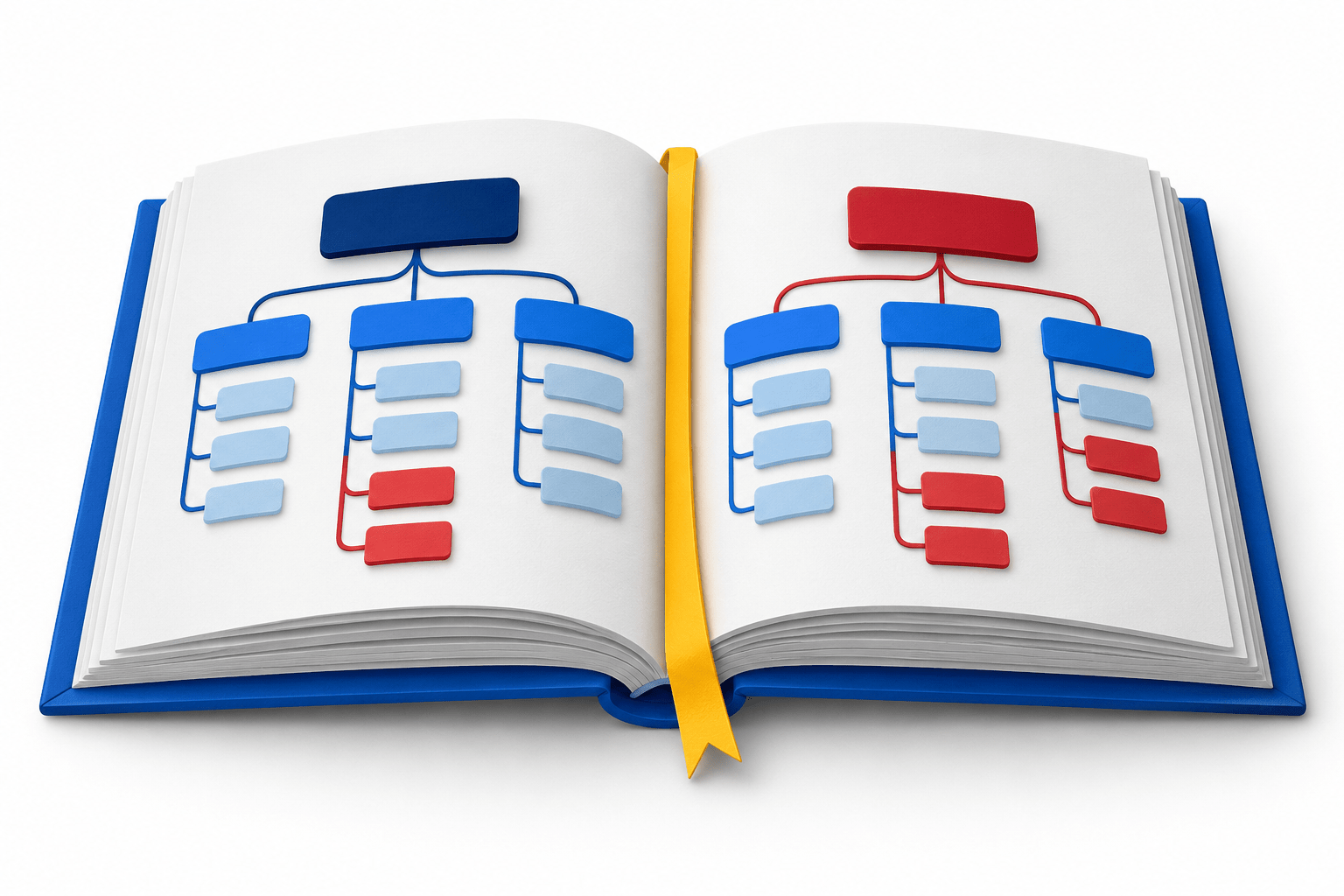
-porter: a thing you carry
em-: away or along with you
| Verb | Use it mainly for | Movement | Typical example |
|---|---|---|---|
| amener | people or animals | bring to a place/person | J’amène Paul à la gare. |
| apporter | things | bring to a place/person | J’apporte le dessert. |
| emmener | people or animals | take away / take along | J’emmène les enfants au parc. |
| emporter | things | take away / take along | J’emporte mon ordinateur. |
When do you use amener?
Use amener when you bring a person or animal to a destination. You focus on their arrival at that place.
Can you bring Julie to the meeting?
I’m taking the dog to the vet.
Notice that English may use either “bring” or “take,” depending on viewpoint. The French verb focuses on leading the person or animal to the named destination.
When do you use apporter?
Use apporter when you bring an object—something you can carry—to a person or place.
I’m bringing a bottle of wine tonight.
Could you bring me the check?
Apporter also appears in abstract expressions: apporter une réponse (provide an answer), apporter de l’aide (provide help), and apporter une précision (add a clarification).
When do you use emmener?
Use emmener when you take a person or animal away from one place or take them along with you somewhere.
I’m taking the children to the museum.
Can I bring a friend along?
The English translation can be “take” or “bring along.” What matters is that the person accompanies you away from the starting point.
When do you use emporter?
Use emporter when you take an object away or take it along with you.
Don’t forget to take your passport with you.
Is that for here or to go?
This is also the verb behind à emporter, the standard expression for takeaway or to go.
Does French always follow the people-versus-things rule?
It is an excellent rule for everyday learner French, but real usage is slightly more flexible. Amener can be used for something that is moved rather than physically carried, especially a vehicle:
I’m taking the car to the garage.
Do not let this nuance stop you from using the core system. For ordinary objects that you carry, apporter/emporter is the safest choice. For people and animals, use amener/emmener.
How does viewpoint change the verb?
Imagine a dinner at Léa’s home. Léa asks you to bring a dessert to her house:
Tu peux apporter un dessert ? — Can you bring a dessert?
Before leaving your own home, you say:
J’emporte le gâteau. — I’m taking the cake with me.
It is the same cake. Apporter views it arriving at the destination; emporter views it leaving the starting point with you.
What mistakes do English speakers often make?
Incorrect: J’apporte mes enfants à l’école.
Natural: J’amène mes enfants à l’école.
Children are people, so use a verb in -mener.
Incorrect: J’emmène mon ordinateur en voyage.
Natural: J’emporte mon ordinateur en voyage.
A laptop is an object you carry, so use a verb in -porter.
Incorrect: Je vais apporter mon parapluie avec moi.
Natural: Je vais emporter mon parapluie.
You are taking it along from the starting point.
Mini practice: choose the right verb
Complete each sentence with the correct form of amener, apporter, emmener or emporter.
- Tu peux ______ une salade pour le déjeuner ?
- Je vais ______ ma fille chez le dentiste.
- Il pleut : ______ ton parapluie.
- Nous ______ nos amis visiter le château.
- Le serveur nous a ______ le menu.
- Est-ce que je peux ______ mon chien à la fête ?
- Vous voulez un café sur place ou à ______ ?
- Elle ______ sa voiture au garage demain matin.
See the answers
- apporter — a salad is something you carry to the lunch.
- amener — you take a person to a destination.
- emporte — take an object along with you.
- emmenons — people accompany us on the visit.
- apporté — the waiter brought an object to us.
- amener — you bring an animal to the party.
- emporter — the fixed expression is à emporter.
- amène — a vehicle is taken to a destination, a standard extension of amener.
Final recap
Start with the noun: people and animals usually take -mener; portable things take -porter. Then choose the direction: a- brings someone or something to a destination, while em- takes them away or along. This gives you the four-way system: amener, apporter, emmener, emporter.
Learn the system, then practise it
Build accurate French through a complete learning ecosystem designed for adult learners.
Frequently asked questions
What is the difference between amener and apporter?
Both describe movement toward a destination. Use amener mainly for a person or animal, and apporter for an object you carry.
What is the difference between emmener and emporter?
Both can mean taking along or away. Use emmener mainly for people and animals, and emporter for things.
How do you say “takeaway” in French?
Use à emporter: un café à emporter means “a coffee to go.”
Can you use amener for a thing?
Sometimes. It is standard with something moved rather than carried, especially a vehicle: amener la voiture au garage. For ordinary portable objects, use apporter.
Article prepared for Planète Français. Audio uses your browser’s French speech synthesis.
Latest articles

Visiter vs Rendre visite: How to Say Visit in French
Use visiter for places and rendre visite à for people—but everyday French also uses aller voir, consulter and passer voir. Learn which expression fits each kind of visit.
Emprunter vs Prêter in French: How to Borrow or Lend
Learn emprunter vs prêter in French: borrow from someone, lend to someone, use the right pronouns, and avoid common mistakes with clear examples in context.
Assister vs Aider in French: Attend or Help Explained
Discover why assister à usually means “attend,” how to use aider with a person, and when assister quelqu’un is a correct formal expression.