Learn French clearly
French Learning Blog
Clear explanations and practical guides for adult learners. Explore French grammar, vocabulary, culture and learning strategies.
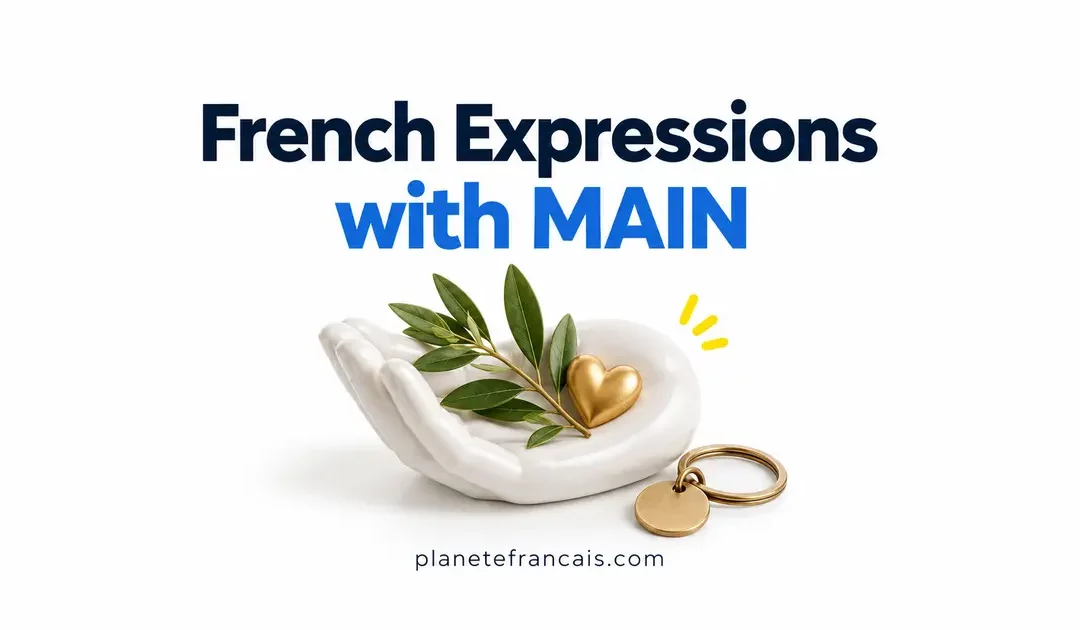
Expressions idiomatiques avec le mot main
Découvrez 30 expressions françaises avec le mot main : la vidéo d’Elsa, 15 expressions illustrées avec des exemples traduits en anglais, et 15 autres expressions en pense-bête.

Join our newsletter and get our tools to boost your French
Explore our latest French lessons and guides

Visiter vs Rendre visite: How to Say Visit in French
Use visiter for places and rendre visite à for people—but everyday French also uses aller voir, consulter and passer voir. Learn which expression fits each kind of visit.
Emprunter vs Prêter in French: How to Borrow or Lend
Learn emprunter vs prêter in French: borrow from someone, lend to someone, use the right pronouns, and avoid common mistakes with clear examples in context.
Assister vs Aider in French: Attend or Help Explained
Discover why assister à usually means “attend,” how to use aider with a person, and when assister quelqu’un is a correct formal expression.
Why Do French -IR Verbs Follow Two Different Patterns?
Why do French -ir verbs form nous finissons but nous partons? Discover the Latin history of -iss- and how to identify second-group verbs today.
Revenir vs Retourner vs Rentrer: Choose the Right Verb
Learn revenir vs retourner vs rentrer in French: compare their usual viewpoints, natural overlap, past-tense patterns, examples, audio and practice.

Il faut vs Devoir in French: How to Express Obligation
Il faut and devoir can both mean “must” or “have to,” but one presents necessity impersonally while the other names who is responsible. Learn the patterns, tone and subjunctive rule.

How to Read a French Novel Without Looking Up Every Word
Constant dictionary checks can make you lose the story. Learn how to choose a readable French novel, decide which words deserve attention and keep reading with intelligent uncertainty.
How to Improve French Writing with Useful Feedback
Reading corrections is not enough to change your next draft. Learn a practical feedback loop that preserves your intention and turns corrections into reusable French.

Partir vs Quitter vs Laisser: How to Say Leave in French
French uses different verbs for departing, leaving a place or person, and leaving something behind. Learn the logic and sentence patterns that separate partir, quitter and laisser.

Se Souvenir vs Se Rappeler: Which One Takes De?
Se souvenir and se rappeler both mean “to remember,” but their complements behave differently. Learn the standard patterns, pronouns and accepted uses of se rappeler de.

How to Learn French When You’re Busy and Stay Consistent
Learn how to make steady progress in French when your schedule is busy, with a realistic routine built around short, focused practice.
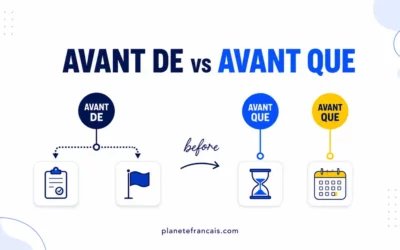
Avant de vs Avant que in French: The Simple Subject Rule
Use avant de when the subject stays the same and avant que when it changes. Learn the subject test, the subjunctive rule and the optional ne explétif.
Manquer vs Rater in French: How to Use Each Verb Correctly
Manquer and rater can both mean “to miss,” but only manquer is used for missing someone or lacking something. Learn the structures that change the meaning.

How to Follow French Group Conversations More Easily
Group conversations demand more than vocabulary. Learn how to track the topic, ask precise questions and enter fast French exchanges with confidence.

Parce Que vs Car vs Puisque: How to Choose in French
Parce que, car and puisque can all introduce a reason, but they organise information differently. Learn which connector sounds natural in each context.
Encore vs Toujours in French: Still, Again or Always?
Encore and toujours can both mean “still,” but they express continuation differently. Learn when French uses each word for still, again, more and always.
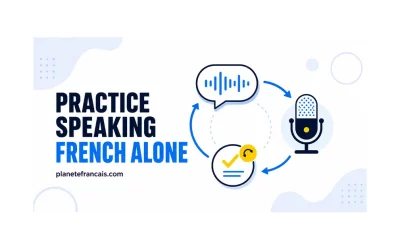
How to Practice Speaking French Alone Without Mistakes
Solo speaking practice can build fluency without making mistakes permanent. Learn a practical feedback loop and a realistic 10-minute routine for adult learners.
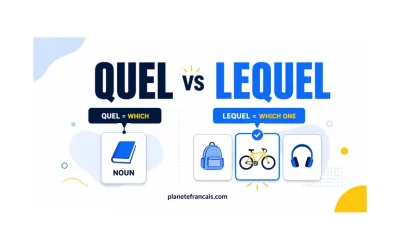
Quel vs Lequel in French: How to Choose the Right One
Use quel before a noun and lequel when the noun is already understood. Learn all the forms, the contractions with à and de, and the mistakes to avoid.
Entendre vs Écouter in French: Hear or Listen Explained
Entendre and écouter both relate to hearing, but only one expresses deliberate attention. Learn the difference through natural examples, common mistakes and a short practice.
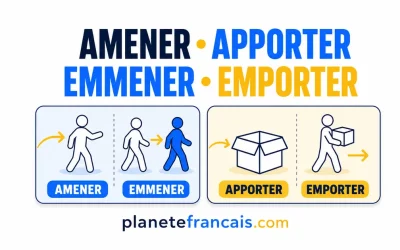
Amener, Apporter, Emmener or Emporter in French?
Should you use amener, apporter, emmener or emporter? Learn the two simple distinctions that help French speakers choose the correct verb naturally.
What to Say When You Forget a French Word
Forgot a French word while speaking? Learn how to keep the conversation going with simple rescue phrases and a practical training routine.
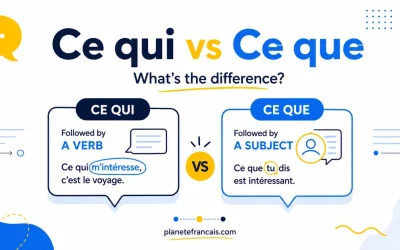
Ce Qui vs Ce Que in French: The Simple Difference
Ce qui and ce que can both mean “what” in English. Learn how to choose the correct form by identifying whether it replaces the subject or object.

Why Your French Is Not Improving
You study French, watch videos and do exercises, but still feel stuck? Learn why your French is not improving and how to make real progress with structure, active practice, speaking, writing and correction.

How to Stop Translating in Your Head When Speaking French
Do you translate every sentence in your head before speaking French? Learn why this happens and how to build automatic French phrases so you can speak more naturally and with more confidence.
Ready to take your French further?
Choose the learning format that suits you: join our live online classes in small groups or follow our structured e-learning programme from A1 to B2.