Learn French clearly
French Learning Blog
Clear explanations and practical guides for adult learners. Explore French grammar, vocabulary, culture and learning strategies.

Visiter vs Rendre visite: How to Say Visit in French
Use visiter for places and rendre visite à for people—but everyday French also uses aller voir, consulter and passer voir. Learn which expression fits each kind of visit.

Join our newsletter and get our tools to boost your French
Explore our latest French lessons and guides

Why You Understand French But Can’t Speak It
You understand French videos, lessons and texts, but when you try to speak, your mind goes blank. Learn why this happens and how to turn passive French into active speaking with simple, guided practice.

Tout, Tous, Toute, Toutes in French: What’s the Difference?
Learn when to use tout, tous, toute and toutes in French, how they agree, and how their pronunciation changes depending on the sentence.

Savoir and Connaître: What’s the Difference in French?
Learn the difference between savoir and connaître in French, with clear structures, natural examples and the mistakes English speakers often make.

Pendant vs Pour in French: What’s the Difference?
Learn when French uses pendant and when it uses pour to express duration, including completed actions, planned periods and common mistakes.

Depuis vs Il y a in French: What’s the Difference?
Learn the difference between depuis and il y a in French: one describes an action that is still continuing, while the other locates a past event.

Why Do French People Eat Snails? History of Escargots in France
Discover why snails became part of French cuisine, how escargots are prepared and what this tradition reveals about French food culture.

Depuis vs Pendant in French: What’s the Difference?
Learn how depuis and pendant express duration differently in French, with timelines, natural examples and a simple way to choose the right form.

Bon vs Bien in French: What’s the Difference?
Learn when to use bon and bien in French, how adjective and adverb patterns work, and the important expressions that do not follow a direct English translation.

Mieux vs Meilleur in French: What’s the Difference?
Learn the difference between mieux and meilleur in French: one improves an action or state, while the other compares a noun.

How to Say “So Far” in French: Jusqu’ici, Jusque-là, Jusqu’à Présent, Jusqu’à Maintenant
Learn the differences between jusqu’ici, jusque-là, jusqu’à présent and jusqu’à maintenant, with natural examples for saying “so far” in French.

Jour vs Journée in French: What’s the Difference?
Learn the difference between jour and journée in French and how perspective, duration and common expressions determine which word sounds natural.

C’est vs Il est in French: What’s the Difference?
Learn when to use c’est and il est in French, including descriptions, professions, adjectives and the sentence patterns English speakers often confuse.

An vs Année in French: What’s the Difference?
Learn the difference between an and année in French and how duration, quantity and emphasis determine which word sounds natural.

Expressions idiomatiques sur les fleurs
Apprenez les expressions idiomatiques sur les fleurs. Learn French idioms about flowers.

Expressions idiomatiques avec le mot coeur
Apprenez des expressions idiomatiques avec le mot coeur. Learn expressions containing the word « coeur ».
The verb s’enfuir and 10 synonyms
Learn how to use the French verb s’enfuir and compare ten useful synonyms, from neutral French to informal expressions.
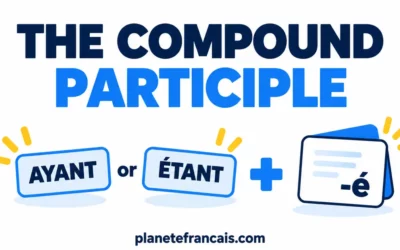
The French compound participle (participe composé)
Learn how to form, agree, and use the French compound participle to express an earlier completed action.

How to use se faire + infinitive in French
Learn the three main uses of se faire followed by an infinitive, with clear examples, grammar notes, and a practice exercise.
French negation: when can you use ne without pas?
Learn when pouvoir, oser, savoir, and cesser can use ne without pas in formal and literary French.

Gender of Countries in French: Masculine or Feminine?
Learn how to identify the gender of country names in French, with useful spelling patterns, important exceptions and practical memory tips.
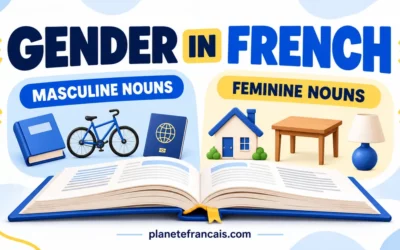
Gender in French: How to Know if a Noun Is Masculine or Feminine
Learn how French noun gender works, which word endings provide useful clues and how to remember whether a noun is masculine or feminine.

Choisir la terminaison é ou er
Comment choisir entre la terminaison é ou er à la fin des verbes en français ? Techniques et astuces.
Ready to take your French further?
Choose the learning format that suits you: join our live online classes in small groups or follow our structured e-learning programme from A1 to B2.